A storms.im site
Hail, measured properly.
Ice that falls from a thunderstorm is not simply frozen rain. The official names — pea, quarter, golf ball — come from a National Weather Service size chart, and in the United States hail becomes severe at one inch, about the size of a quarter.

What counts as hail?
The National Weather Service glossary defines hail as showery precipitation in the form of irregular pellets or balls of ice more than 5 mm in diameter, falling from a cumulonimbus cloud. [source]
A severe thunderstorm, in the official American sense, is one that produces hail at least one inch (25 mm) in diameter, and/or wind gusts of at least 58 mph. Hail of that size can damage plants, roofs and vehicles. [source]
The record stone
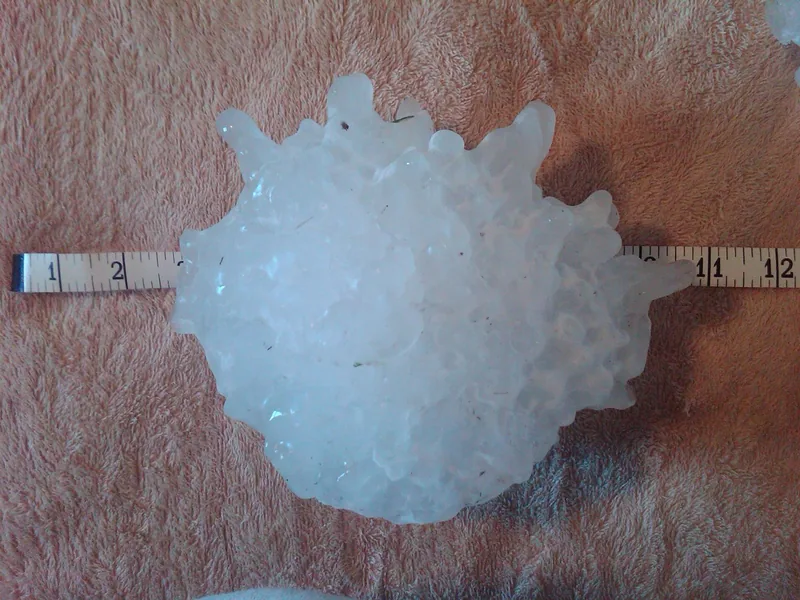
On 23 July 2010 a hailstone recovered at Vivian, South Dakota, was measured at 8.0 inches across and 1.9375 pounds. NOAA's National Climate Extremes Committee accepted those figures as United States records for diameter and weight. A stone that fell at Aurora, Nebraska, on 22 June 2003 still holds the record for circumference, at 18.75 inches. [source]
Keep the lights on
Enjoyed the ice?
No pop-ups. No intrusive advertising. Just interesting stuff. If a fact or the size desk was useful, a little support helps the next storm site get built.